 ProMapRanker
Best AEO Tools for Agencies in 2026

Key takeaways
- AEO tools for agencies need multi-client workspaces, clear prompt limits, and reports clients can read without a training session.
- Otterly.AI is the cheapest credible entry point, while Scrunch and Profound suit larger agency programs with deeper optimisation work.
- Prompt counts, engine coverage, and check frequency matter more than a single visibility score, so compare those limits directly.
- White-label reports, unlimited seats, and API access separate agency-ready tools from single-brand trackers.
Quick comparison
| Pick | Great for | Pricing starts at | Free tier | |
|---|---|---|---|---|
 Profound | Enterprise agency programs | See website | Free trial | Visit |
 Scrunch | Tracking plus content action | $250 per month | Free trial | Visit |
 Peec AI | Daily prompt tracking for agencies | See website | Free trial | Visit |
 Otterly.AI | Low-cost agency tracking | $29 per month | Free trial | Visit |
 AthenaHQ | Credit-based tracking with actions | $295 per month | Yes | Visit |
 Semrush AI Visibility Toolkit | SEO teams already on Semrush | $99 per month | Free trial | Visit |
 Goodie | Brand visibility and sentiment | $399 per month | No | Visit |
 ZipTie.dev | Usage-based agency tracking | See website | Free trial | Visit |
 Nightwatch | Rank tracking with AI visibility | See website | Free trial | Visit |
The best AEO tools for agencies
Answer engine optimisation, often called AEO or GEO, tracks how brands appear in AI answers from ChatGPT, Gemini, Perplexity, and Google AI Overviews. For agencies, the hard part is not tracking one brand, it is tracking many clients, keeping prompt sets comparable, and turning a visibility gap into a content task. We compared official feature pages, pricing pages, and public reviews, and kept tools that work in October 2026 with agency-friendly features.
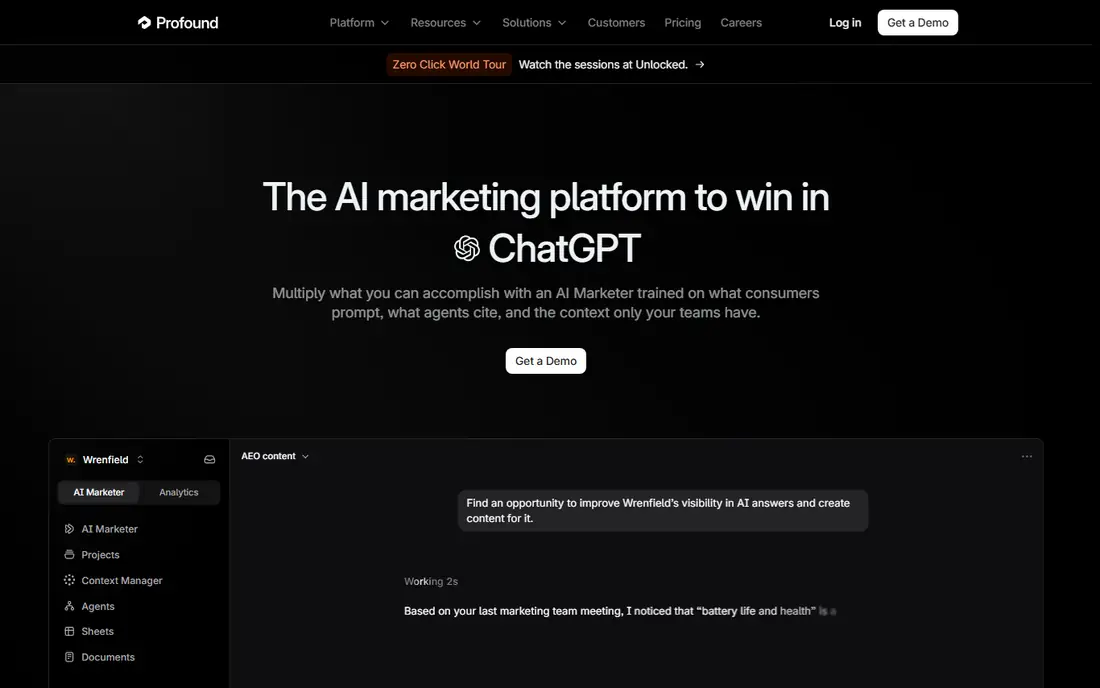
Profound is the agency tool to shortlist when clients are large and the program needs depth. It tracks visibility across many AI engines, analyses the traffic AI tools send, and offers agents that help close content gaps rather than only reporting them. The agency plan with client workspaces also fits firms that need to keep clients separate.
The change to watch is pricing. Profound withdrew its lower self-serve tiers in September 2026, leaving a free trial and custom enterprise pricing, plus an agency plan. That makes it harder for a small agency to start cheaply, and it means you should get a written quote for your actual client count before pitching it internally.
- Broad engine coverage on enterprise tiers
- Content agents that act on gaps
- Agency workspaces on self-serve plans
- Self-serve starter tiers were withdrawn in 2026
- Enterprise pricing is quoted
- Smaller agencies may find it heavy
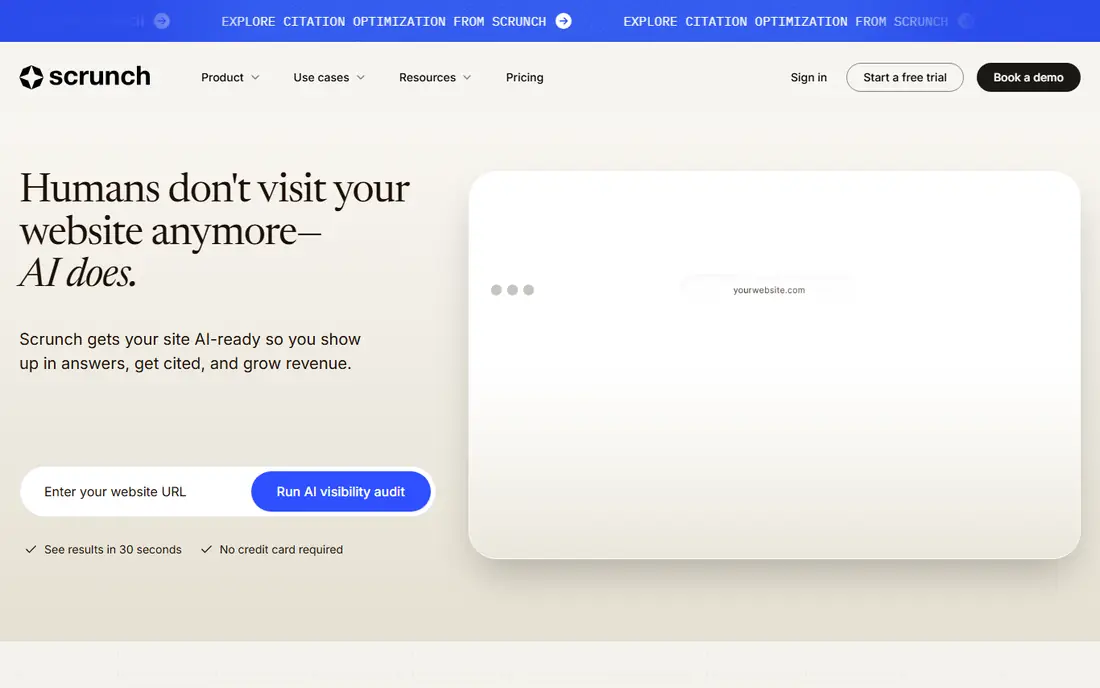
Scrunch suits agencies that want to move from measurement to fixes. It tracks how brands appear across AI surfaces, shows which personas and journeys matter, and links gaps to content work. Bot traffic data also helps agencies explain how AI crawlers interact with client sites, which is useful in client reporting.
The entry price is higher than a basic tracker, and the entry tier covers one country and one language, so multi-country clients will need higher plans. Scrunch still earns its place here because it pairs tracking with action, which is what clients pay an agency to do.
- Persona and journey views
- Bot traffic data
- Clear recommendations tied to content gaps
- Higher entry price than basic trackers
- One country and language on the entry tier
- Limits need care at scale
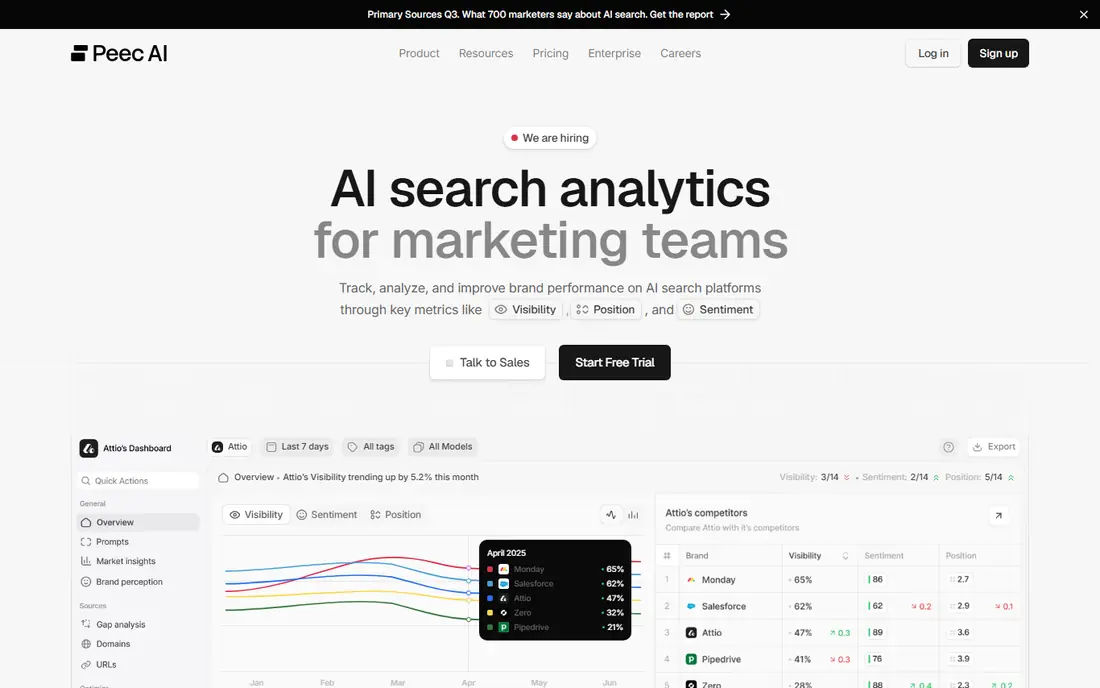
Peec AI is a focused tracker for agencies that want daily, prompt-level data. It shows whether a brand is named, cited, or missing in AI answers, and it updates on a daily cycle that suits weekly client reporting. Unlimited seats on the plans reviewed also help agencies that involve strategists, writers, and account managers.
Pricing needs a direct check, since Peec AI no longer always shows rates to logged-out visitors and reported entry prices have varied. Ask for the plan that covers your engine list, prompt count, and country coverage, and confirm whether extra models are included or billed as add-ons.
- Daily prompt runs
- Named versus cited tracking
- Unlimited seats on plans reviewed
- Public pricing is not always shown to logged-out visitors
- Engine choice varies by plan
- Add-ons raise cost
Otterly.AI is the practical starting point for a small agency that needs AEO tracking without a large contract. The entry plan covers ChatGPT, AI Overviews, Perplexity, and Copilot, with other engines available as add-ons, and the setup is simple enough to add a client quickly. For agencies testing AEO as a service line, that low entry cost matters.
The entry tier only covers a small prompt set, so agencies with many clients or deep prompt lists will need higher plans. It is also a tracker first, not a full content optimisation platform, so content work still happens in your usual SEO workflow.
- Lowest entry price in this list
- Four base engines on every plan
- Simple setup for small client sets
- Small prompt allowance on entry tier
- Some engines are add-ons
- Reporting depth trails enterprise tools
AthenaHQ gives agencies a way to test before committing, with a free Essential tier based on credits. Paid plans cover many models, including ChatGPT, Gemini, Perplexity, Claude, AI Mode, AI Overviews, and Copilot, and they add citation analysis and suggested on-page and off-page actions. That combination suits agencies that want tracking plus a next step.
Credits are the catch. One credit equals one AI response in the model reviewed, so prompt count, engine count, and check frequency all draw from the same pool. Agencies should model a typical client before buying, or a busy month can burn credits faster than expected.
- Free Essential tier to test
- Broad model coverage on paid plans
- Citation and on-page action features
- Credit model needs careful budgeting
- Starter tier covers one language
- Higher entry price than basic trackers
Semrush AI Visibility Toolkit makes sense when the agency already pays for Semrush. It adds AI visibility tracking to existing keyword, backlink, and content workflows, and it draws on a large prompt database for context. Teams that already report from Semrush will find client reporting easier than learning a new platform.
The per-domain price is the limit for agencies. Each client domain adds cost, and the entry prompt allowance is modest, so a large client roster needs careful budgeting. It is a strong add-on for existing Semrush users, but a weaker choice as the sole AEO platform for a large agency.
- Sits inside a familiar SEO suite
- Large prompt database
- Coverage across major AI surfaces
- Priced per domain, so many clients multiply cost
- Not a standalone agency AEO platform
- Prompt allowance is limited at entry
Goodie focuses on how a brand appears and feels in AI answers, with dashboards, sentiment views, and model coverage that grows on higher tiers. For agencies serving consumer brands, sentiment and share of voice are often easier to explain to clients than raw prompt counts. Enterprise plans add revenue attribution and API access for deeper reporting.
The entry price is high for a small agency, and the lack of a free plan means you should request a demo with a real client prompt set before buying. Goodie fits agencies with brand-led clients and a budget for a dedicated AEO tool, rather than agencies adding AEO as a low-cost extra.
- Broad model coverage on higher tiers
- Sentiment and dashboard views
- Revenue attribution features on enterprise plans
- Higher entry price
- No free plan found
- Smaller agencies may not need the full depth
ZipTie.dev moved to a configurator model, where price follows how many prompts run daily, weekly, and monthly, and which engines you track. That flexibility suits agencies with uneven client sizes, since a small prompt set costs far less than a large one. AI success scores also help account teams decide which queries deserve attention first.
Usage pricing cuts both ways. It rewards careful prompt design, but it punishes sprawling prompt lists, and add-ons for content generation and API access cost extra. Model a few real clients in the calculator before quoting AEO work to your own clients, or margins can slip.
- Configurator pricing scales with prompt use
- AI success scores prioritise work
- Agency setups reviewed as affordable for small sets
- Pricing is usage-based and needs modelling
- Older tier prices in reviews are out of date
- Add-ons cost extra
Nightwatch suits agencies that already track rankings and want AI visibility in the same workflow. It adds AI tracking to rank data, offers city-level detail on some plans, and unlimited seats help larger agency teams. For firms that report rankings weekly, adding AI visibility to that same report is efficient.
The trade-off is depth. A specialist AEO platform will usually offer deeper prompt analysis, citation detail, and content actions than a rank tracker with an AI module. Nightwatch is best when AI visibility is one part of a broader SEO retainer, not the core service.
- Combines rank tracking with AI tracking
- City-level data on some plans
- Unlimited seats on plans reviewed
- AEO is part of a broader tracker, not a specialist platform
- Entry pricing in euros
- Agency reporting needs checking
How we picked these
We compared official feature pages, pricing pages, and public reviews, and kept only tools that work in October 2026 for agency AEO work. We favoured tools with multi-client support, clear engine coverage, prompt and credit limits stated on the plan, and reporting suitable for clients. We excluded tools that only track a single brand with no agency features, tools with no verifiable pricing or trial path, and tools that could not be confirmed as live.
What to check before you pay
Start with a real client prompt set, not a demo list. Pick ten to twenty questions a customer would actually ask, run them across the tools on your shortlist, and compare which brands get named, which pages get cited, and which answers are stable across runs. AI answers vary, so a tool that shows variance and run history is more trustworthy than one that shows a single score.
Check the agency maths carefully. Count clients, prompts per client, engines per prompt, and check frequency, then price that total, not the headline prompt count. Ask about white-label reports, client seats, API access, and data export, because those features decide whether AEO work scales or becomes manual reporting.
Finally, agree on what success looks like before you sell it. Citation share, brand mentions, and AI referral traffic are useful, but they do not always move sales directly. Set a reporting rhythm, a content action for each gap, and a review date, so clients see work happening rather than a dashboard they never open.
Frequently asked questions
What are the best AEO tools for agencies?
Profound, Scrunch, and Peec AI suit larger or more mature agency programs, while Otterly.AI and ZipTie.dev suit smaller agencies starting out. Semrush AI Visibility Toolkit suits agencies already on Semrush, and AthenaHQ suits teams that want a credit-based test before committing. The right pick depends on client count, prompt volume, and whether you need content actions or just tracking.
What is the best AEO platform for agencies on a budget?
Otterly.AI is the cheapest credible entry point in this list at $29 a month, with four base engines. ZipTie.dev can also be affordable for small prompt sets, because its configurator prices by actual use. Both need higher plans as prompt sets grow, so budget for growth rather than only the entry price.
How do AEO tools track AI search visibility?
They run a set of prompts through AI engines on a schedule, then record whether a brand is named, cited, or missing, and which pages or competitors appear instead. Good tools show the full answer context, run history, and variance, so you can tell a real trend from a one-off answer. They do not control what an AI model says, they measure it.
Do agencies need white-label AEO reports?
Not always, but they help when AEO is sold as a client-facing service. White-label reports let clients see their own brand and logo without learning a new vendor tool, and they keep the agency as the point of contact. If AEO is an internal research tool, seats and export matter more than white labelling.
Can AEO tools guarantee a brand will be cited by AI?
No. No tool can force an AI model to cite a specific page, and any vendor that promises a guaranteed citation should be treated with caution. Tools can show gaps, suggest content and structure changes, and track whether visibility improves over time, but the model, the prompt, and the wider web all affect the answer.
Sources
See where you really rank - block by block
ProMapRanker scans Google Maps across a grid of your service area. Simple monthly plans from $19, white-label on every plan.
Start freeKeep reading
 zoho books alternatives
Best Zoho Books Alternatives in 2026
Compare the best zoho books alternatives for small business accounting, from QuickBooks Online and Xero to FreshBooks, Wave, and Sage in 2026, with pricing.
Read → zluri alternatives
Best Zluri Alternatives in 2026
Compare zluri alternatives for 2026, with SaaS management platforms for app discovery, spend tracking, renewals, and automation for IT, finance and procurement.
Read → zerobounce alternatives
Best ZeroBounce Alternatives in 2026
Best zerobounce alternatives for list hygiene: compare 8 email verification tools for bulk cleaning, real-time checks and catch-all handling in 2026 today.
Read →