 ProMapRanker
Best Amazon SNS Alternatives in 2026

Backend messaging on Google Cloud · Pricing starts at: See website
Key takeaways
- Amazon SNS is a publish and subscribe service that fans messages out to many endpoints, so the right replacement depends on whether you need backend messaging, user push or both.
- Cloud messaging services suit teams already inside Google Cloud or Azure, while dedicated push platforms suit product teams that want campaigns and analytics.
- Realtime services such as Ably, PubNub and Pusher fit live features like chat and live updates, which plain topic fan-out handles poorly.
- Pricing units differ sharply across this list, so compare per-message, per-subscriber and per-connection costs against your actual traffic before choosing.
Quick comparison
| Pick | Great for | Pricing starts at | Free tier | |
|---|---|---|---|---|
| Google Cloud Pub/Sub | Backend messaging on Google Cloud | See website | Free trial | Visit |
 Azure Service Bus | Queues and topics on Azure | See website | Free trial | Visit |
 Firebase Cloud Messaging | Free mobile and web push | Free | Yes | Visit |
 OneSignal | Push, email and SMS campaigns | Free | Yes | Visit |
 Ably | Realtime data streams | See website | Yes | Visit |
 PubNub | Realtime chat and live apps | See website | Yes | Visit |
 Pusher | Realtime features for web apps | See website | Yes | Visit |
 Confluent Cloud | Kafka streaming at scale | See website | Free trial | Visit |
 CloudAMQP | Managed RabbitMQ queues | See website | Yes | Visit |
The best amazon sns alternatives
Amazon SNS sends one published message to many subscribed endpoints, including queues, functions, email, SMS and mobile push. Some teams use it mainly as backend plumbing, while others use it to reach users on their phones. The services below split along that same line, so start by deciding which job you are replacing. We compared official feature pages, pricing pages, documentation and public reviews to build this list.

Google Cloud Pub/Sub is the closest like-for-like replacement for backend SNS use inside Google Cloud. Publishers send messages to topics, subscribers pull or receive them, and the service handles scaling and retry behaviour. It fits event-driven systems where one event should trigger several downstream services.
The catch is scope. Pub/Sub is infrastructure, not a user messaging product, so it will not run push campaigns or manage subscriber preferences for you. Teams that only need backend fan-out will find it a clean swap, while teams that also need user-facing push should pair it with a push service from this list.
- Scales to very high throughput
- Global delivery
- Integrates with Google Cloud services
- Tied to Google Cloud
- Push to end users needs extra tooling

Azure Service Bus covers both queues and publish-subscribe topics, which makes it a good fit for teams moving SNS workloads into Azure. Topics with subscriptions mirror the SNS pattern closely, while queues handle work that must be processed once and in order. Sessions and dead-letter queues help with messages that fail repeatedly.
Azure pricing is tiered, so small workloads and large workloads can land in very different price bands. Check message size, throughput and feature tier together before estimating cost. For Microsoft-centred teams, the integration with Azure Functions and Logic Apps is a genuine advantage.
- Queues and topics in one service
- Ordered delivery and sessions
- Strong enterprise controls
- Tied to Azure
- Pricing tiers need care at scale
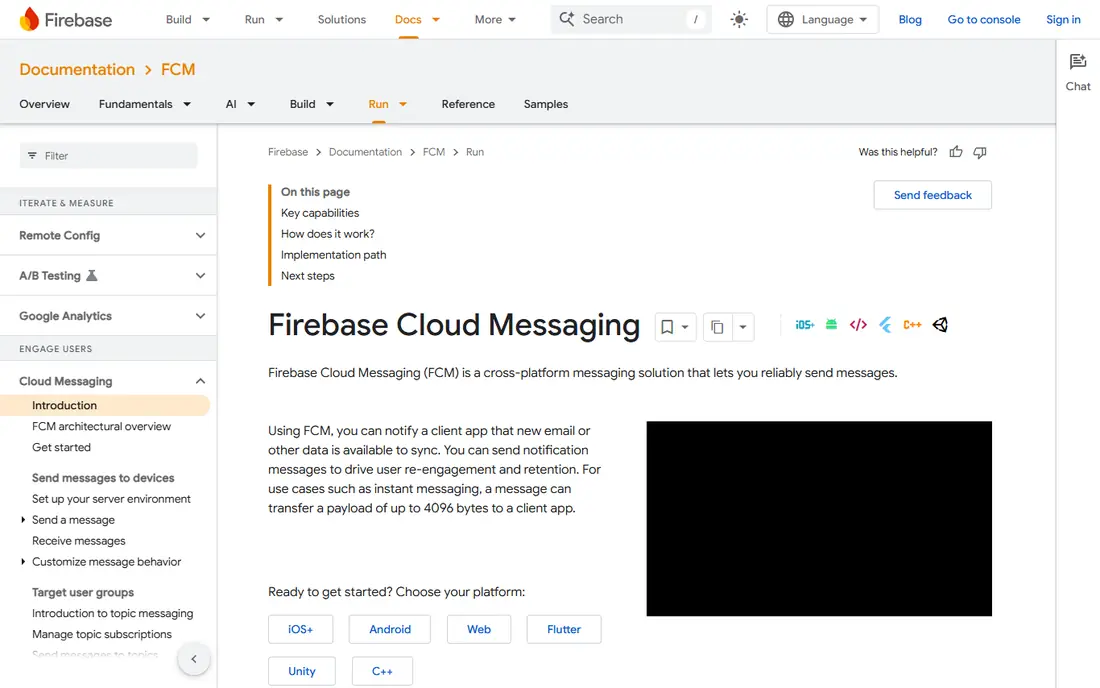
Firebase Cloud Messaging, usually called FCM, is the free route to mobile and web push for most app teams. It delivers notifications to Android, iOS and web apps, supports topics for fan-out, and costs nothing for message delivery itself. If SNS was mainly your push pipe, FCM often replaces it outright.
FCM is not a general message bus. It lacks the queue semantics, ordering and backend routing that SNS topics paired with queues provide. It also works best inside the Firebase and Google ecosystem. Use it for reaching users, and keep a separate queue service for backend work.
- Free at high volume
- Works with Android, iOS and web
- Ties into Firebase analytics
- Push only, not general backend messaging
- Topic management is basic
OneSignal suits product and marketing teams more than pure infrastructure teams. It handles push, in-app messages, email and SMS from one dashboard, with segments, scheduled sends and delivery analytics built in. That combination replaces both the SNS delivery pipe and the campaign tooling many teams bolt on beside it.
The free tier covers push for many small apps, which makes it easy to test. Costs rise with audience size and with advanced features such as journeys and higher message volumes. If your main need is reliable backend fan-out rather than campaigns, a cloud messaging service will be simpler and cheaper.
- Generous free tier for push
- Campaigns, segments and analytics included
- Multi-channel support
- Advanced features sit on paid plans
- Pricing changes with subscriber counts
Ably is built for realtime data: live scores, location updates, collaborative editing and chat-style features where seconds matter. Its channels, presence tracking and message history go well beyond what SNS topics offer. If your product feels live, Ably is closer to the right tool than a plain notification service.
Ably pricing follows realtime usage, including messages and peak connections, so a quiet app and a busy live event can cost very different amounts. It is also more than a notification pipe, so teams that only send occasional alerts will not use most of what they pay for. Shortlist it when latency and live state are core to the product.
- Low-latency realtime delivery
- Presence and history features
- Dependable at scale
- Priced on messages and connections
- Overkill for simple scheduled notifications
PubNub has served realtime apps for years, and its strength is the full stack around live features: chat, presence, message history and moderation tooling alongside the realtime pipe. Teams building chat, live events or multiplayer-style features get more here than from a raw topic service.
That depth is also the downside for simple needs. If you only need to fan a backend event out to a few services, PubNub adds cost and concepts you will not use. It earns its place when realtime interaction is a product feature, not just an alert channel.
- Mature realtime platform with chat tooling
- Global edge network
- Presence and storage options
- Pricing is usage-based
- Simple push use cases cost more than FCM
Pusher splits its product into Channels for realtime web features and Beams for push notifications, which maps neatly onto the two halves of many SNS workloads. Its documentation and client libraries make it quick to add live updates to a web app without building realtime infrastructure yourself.
The free tier is useful for development and small apps, but connection and message limits mean a popular live feature can outgrow it quickly. Pusher fits small and mid-size teams that want realtime features without operating their own streaming stack. Larger teams should model peak concurrent users before committing.
- Easy to add to web apps
- Channels and Beams cover realtime and push
- Clear documentation
- Free tier limits connections and messages
- Costs grow with concurrent users
Confluent Cloud offers managed Apache Kafka, which is a different beast from SNS but a strong replacement for high-volume event streaming. Events are stored durably, replayed when needed and processed by many consumers at their own pace. Connectors link Kafka to databases, cloud storage and other systems without custom glue code.
Kafka is overkill for a team that sends a few thousand notifications a day. It fits when events are the system of record, when consumers need to replay history, or when throughput and ordering matter at scale. Budget time for learning Kafka concepts, even with a managed service handling the servers.
- Managed Kafka with connectors and stream processing
- Durable event storage
- Strong ecosystem
- Heavier than SNS for simple fan-out
- Learning curve for new teams
CloudAMQP runs managed RabbitMQ, the classic open-source message broker. It gives teams queues, exchanges, routing keys and retry handling without operating servers. For workloads where each message must be processed reliably by a worker, RabbitMQ semantics often fit better than SNS fan-out alone.
RabbitMQ thinking differs from SNS thinking, so teams moving topics directly may need to redesign routing. Small plans also have throughput limits that suit development more than production. CloudAMQP fits teams that already know RabbitMQ or want its queue guarantees without the operations burden.
- Managed RabbitMQ without server work
- Queues, routing and retries
- Plans from tiny to large
- RabbitMQ patterns differ from SNS topics
- Throughput ceilings on small plans
How we picked these
We compared official feature pages, pricing pages, documentation and public reviews for services that replace SNS backend messaging, user push or realtime delivery. We kept only services that are live and actively sold in October 2026, and we grouped them by job so readers can see which ones are infrastructure and which are product-facing. Where pricing is usage-based or tiered, we say so rather than quoting a single number that would mislead at different volumes.
What to check before you switch
First, separate backend events from user messages. Backend events need queues, retries and ordering guarantees. User messages need delivery analytics, opt-out handling and campaign controls. One service rarely does both jobs well, and many teams end up with two tools from this list instead of one.
Second, model your real traffic. Count messages per month, peak concurrent connections and average message size, then price each candidate against those numbers. A free tier that looks generous at a thousand users can turn expensive at a hundred thousand. Finally, test delivery end to end on real devices and real networks, including poor connectivity, before you move production traffic.
Frequently asked questions
Can one service replace all of Amazon SNS?
Sometimes, but often not cleanly. Cloud services replace the backend fan-out job, while push platforms replace the user notification job. Many teams pair a queue service with a push service to cover both.
What is the cheapest Amazon SNS alternative for push?
Firebase Cloud Messaging is free for message delivery and suits most app push needs. OneSignal also offers a free tier for push with campaign tooling included, though advanced features are paid.
Is Google Cloud Pub/Sub a direct SNS replacement?
For backend messaging on Google Cloud, yes, it is the closest match. It does not replace user-facing push campaigns, so teams that need both should add a push service alongside it.
Do these alternatives support SMS and email?
OneSignal supports push, email and SMS from one platform. Cloud messaging services focus on backend delivery, so SMS and email usually need a separate provider or an added integration.
How hard is it to migrate from SNS topics?
Migration effort depends on how your topics are wired. Simple fan-out to queues or functions ports quickly, while topic filtering, retry logic and delivery policies need careful mapping to the new service's model.
Sources
See where you really rank - block by block
ProMapRanker scans Google Maps across a grid of your service area. Simple monthly plans from $19, white-label on every plan.
Start freeKeep reading
 zoho books alternatives
Best Zoho Books Alternatives in 2026
Compare the best zoho books alternatives for small business accounting, from QuickBooks Online and Xero to FreshBooks, Wave, and Sage in 2026, with pricing.
Read → zluri alternatives
Best Zluri Alternatives in 2026
Compare zluri alternatives for 2026, with SaaS management platforms for app discovery, spend tracking, renewals, and automation for IT, finance and procurement.
Read → zerobounce alternatives
Best ZeroBounce Alternatives in 2026
Best zerobounce alternatives for list hygiene: compare 8 email verification tools for bulk cleaning, real-time checks and catch-all handling in 2026 today.
Read →