 ProMapRanker
AI Local Visibility Index for Law Firms: Ranking in AI Answers

The landscape of local search for law firms is undergoing a profound transformation, driven by artificial intelligence. Today, clients aren't just typing keywords into a search bar; they're increasingly asking natural language questions to AI assistants like ChatGPT, Gemini, or directly within Google Search's AI Overviews. For law firms, AI Local Visibility means optimizing your online presence so these intelligent systems not only find but also confidently recommend your services as the best answer to a prospective client's query. This isn't merely about traditional ranking on a SERP; it's about being the trusted, authoritative source that AI chooses to present, ensuring your firm is front and center when a local client needs legal counsel, often before they even see a list of links.
What is AI Local Visibility and why is it crucial for law firms?
AI Local Visibility for law firms refers to the strategic optimization of a firm's digital footprint to ensure it is accurately and prominently recommended by AI-powered search engines and language models for local legal queries. It extends beyond traditional local SEO by focusing on how AI synthesizes information to provide direct, often singular, recommendations rather than just listing search results. This shift is crucial because AI answers are becoming a primary gateway for potential clients, influencing their decision-making process before they even click a link.
The rise of generative AI in search, exemplified by Google's AI Overviews and the capabilities of tools like ChatGPT and Gemini, fundamentally changes how users discover local businesses, including law firms. These AI systems act as intelligent filters, processing vast amounts of data to deliver concise, authoritative answers. For a law firm, achieving AI Local Visibility means positioning your practice as the most relevant, trustworthy, and expert option in your geographic area and practice niche, as determined by sophisticated algorithms. Failing to adapt means your firm risks becoming invisible in an increasingly AI-driven search ecosystem, allowing competitors who embrace this new paradigm to capture valuable local leads.
How do AI models like ChatGPT and Gemini generate local recommendations for legal services?
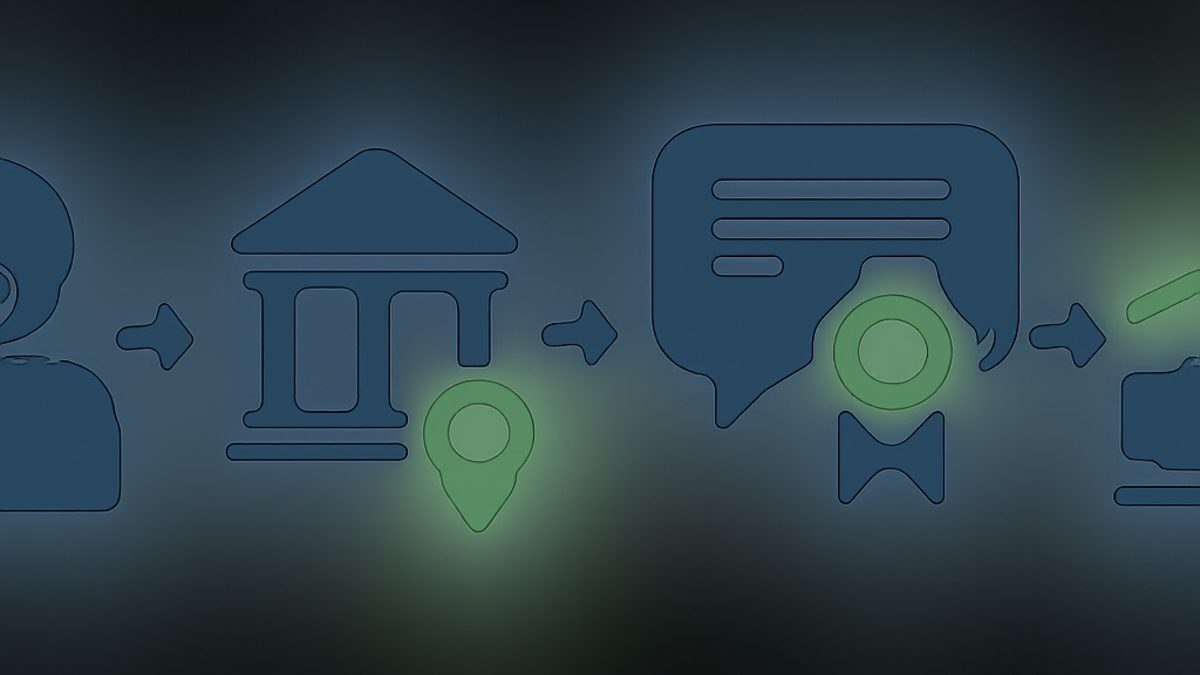
AI models generate local recommendations for legal services by aggregating and interpreting a vast array of online data points, then synthesizing this information to answer natural language queries. They assess a law firm's digital presence for relevance, authority, and trustworthiness, much like a human researcher would, but at an exponential scale. This process goes beyond simple keyword matching, focusing on understanding the intent behind a query and matching it with the most suitable, locally available legal expertise.
These AI systems analyze signals from your Google Business Profile, website content, client reviews, online citations, and structured data (Schema markup). They use Natural Language Processing (NLP) to understand the nuances of a searcher's request, such as "divorce lawyer near me with good client reviews" or "best personal injury attorney in downtown Austin." The AI then cross-references this with the E-E-A-T (Experience, Expertise, Authoritativeness, Trustworthiness) signals from various sources to identify the most credible and geographically relevant options. Firms with complete, consistent, and highly rated online profiles, combined with expert-driven website content, are far more likely to be selected for AI-generated recommendations.
What specific data points does AI use to recommend law firms locally?
AI models rely on a comprehensive set of data points to recommend law firms locally, prioritizing accuracy, authority, and user experience. These data points collectively inform the AI's decision-making process, determining which firm is the most appropriate and trustworthy answer to a local legal query. Optimization across all these areas is essential for maximizing AI search visibility.
Here's a breakdown of the critical data points:
-
Google Business Profile (GBP) Data: This is arguably the most critical component. AI systems heavily scrutinize the completeness and accuracy of your GBP. Key elements include:
- Primary and Secondary Categories: Precise categorization (e.g., "Personal Injury Attorney," "Family Law Attorney") helps AI match your services to specific queries.
- Service Areas: Clearly defined service areas ensure you appear for relevant geographic searches.
- Business Hours: Accurate and updated hours are vital for client convenience.
- Photos and Videos: High-quality, relevant media (e.g., firm facade, team photos) signal professionalism and authenticity.
- Products/Services: Detailed listings of specific legal services offered.
- Q&A Section: Actively managed Q&A provides direct answers that AI can leverage.
- Posts: Regular, informative GBP posts signal activity and relevance.
-
Website Content and Structure: Your website serves as the authoritative source for detailed information.
- Practice Area Pages: In-depth, well-written content for each legal specialty, demonstrating expertise.
- Location Pages: Dedicated pages for each office location, including local testimonials and specific local details.
- Attorney Bios: Detailed profiles highlighting experience, education, bar admissions, and specializations, contributing to E-E-A-T.
- Client Testimonials/Case Studies: Real-world examples of success and client satisfaction.
- FAQs and Blog Content: Answering common legal questions directly provides AI with ready-to-use information.
-
Reviews and Ratings: The quantity, quality, and sentiment of online reviews are powerful AI signals.
- Google Reviews: The most influential, with AI analyzing average star rating (aim for 4.5+), total number of reviews (50+ is a good threshold), recency, and detailed content.
- Third-Party Reviews: Reviews on legal-specific platforms like Avvo, FindLaw, Yelp, and state bar directories also contribute to overall reputation.
- Owner Responses: Thoughtful and timely responses to all reviews (positive and negative) demonstrate client engagement and professionalism.
-
Citations and NAP Consistency: Consistent Name, Address, Phone Number (NAP) across online directories is foundational.
- Local Directories: Listings on 20+ authoritative legal and general business directories (e.g., Justia, Lawyers.com, Yellow Pages) reinforce your firm's existence and contact details.
- Data Aggregators: Ensuring accuracy with major data aggregators helps propagate correct information across the web.
- Schema Markup: Structured data, particularly LocalBusiness, LegalService, and Attorney schema, explicitly tells AI about your firm's details, services, and location in a machine-readable format.
-
Geospatial Data and Proximity: AI considers the physical location of the searcher relative to the law firm.
- Proximity: How close the firm is to the searcher's location or the location specified in the query.
- Service Area Overlap: Matching the firm's defined service area with the query's geographic intent.
ProMapRanker's comprehensive Google Business Profile audit and geo-grid tracking tools are designed to help law firms identify and optimize these critical data points, ensuring maximum AI visibility. Our platform helps you visualize your performance across a 5x5 grid at 5 miles, revealing exactly where you need to improve to capture AI-driven local traffic.
How can law firms optimize their Google Business Profile for AI search visibility?
To optimize their Google Business Profile (GBP) for AI search visibility, law firms must ensure every section is meticulously completed, accurate, and regularly updated, while actively engaging with clients. A pristine GBP acts as your firm's digital storefront, providing AI with the reliable, structured data it needs to confidently recommend your services. This proactive management is paramount as AI systems prioritize authoritative and well-maintained profiles.
-
Complete All Fields with Precision:
- Business Name: Use your exact registered business name. Avoid keyword stuffing.
- Primary & Secondary Categories: Select the most specific primary category (e.g., "Personal Injury Attorney") and add all relevant secondary categories (e.g., "Trial Attorney," "Civil Litigation Attorney"). This is crucial for matching diverse queries.
- Service Areas: Clearly define the cities, counties, or regions you serve.
- Hours of Operation: Keep these strictly accurate, including holiday hours.
- Phone Number & Website: Ensure these are correct and consistent with your website and other online listings.
- Description: Write a compelling, keyword-rich description of your firm's mission, practice areas, and unique selling propositions.
-
Upload High-Quality Photos and Videos:
- Include exterior and interior photos of your office, headshots of attorneys and staff, and team photos. Aim for at least 10-15 high-resolution images.
- Consider a short video introduction to your firm or specific practice areas. Visuals significantly boost engagement and trust signals for AI.
-
Actively Manage Reviews:
- Solicit Reviews: Implement a strategy to consistently ask satisfied clients for Google reviews.
- Respond to All Reviews: Thank clients for positive feedback and address negative reviews professionally and constructively. Timely responses (within 24-48 hours) are a strong signal of client care to AI.
- Aim for a minimum of 50 reviews with an average rating of 4.5 stars or higher.
-
Utilize GBP Posts:
- Regularly publish posts about legal news, firm updates, new services, case successes (anonymized), or special events. This shows continuous activity and provides fresh content for AI to analyze.
- Use relevant keywords and calls to action in your posts.
-
Manage the Q&A Section:
- Proactively answer common questions clients might have about your legal services, even if no one has asked them yet.
- Monitor user-submitted questions and provide accurate, concise answers promptly. This directly feeds AI with information it can use in answers.
ProMapRanker offers specialized GBP audit tools that can quickly identify gaps and opportunities in your profile, providing actionable recommendations to optimize for AI visibility. Our platform tracks your performance, showing you how changes impact your local rank on a geo-grid.
What role does website content and technical SEO play in AI local recommendations?
Website content and technical SEO are foundational for AI local recommendations, serving as the authoritative source of expertise and ensuring AI can efficiently access and understand your firm's offerings. A well-structured, fast, and informative website with relevant schema markup directly influences how AI systems perceive your firm's E-E-A-T (Experience, Expertise, Authoritativeness, Trustworthiness), making it more likely to be recommended. Without a robust website, even a perfect GBP can fall short, as AI seeks comprehensive validation of your legal expertise.
Content Strategy for AI Local Visibility:
- In-Depth Practice Area Pages: Develop comprehensive pages for each legal service. For instance, a "Car Accident Lawyer" page should cover types of accidents, common injuries, state-specific laws, and the firm's approach. This signals deep expertise to AI.
- Localized Content: Create content that speaks to local issues and demographics. Mention local courts, specific community events, or legal challenges unique to your service area. This reinforces local relevance.
- Attorney Bios and Firm History: Detailed attorney profiles, including education, bar admissions, awards, publications, and professional affiliations, are crucial for demonstrating expertise and authority. A compelling "About Us" page builds trust.
- Client Testimonials & Case Studies: Showcase success stories (while respecting client confidentiality) and positive feedback. AI analyzes sentiment and success rates as part of its recommendation algorithm.
- FAQs and Blog Posts: Proactively answer common legal questions. AI frequently pulls answers directly from well-structured FAQ sections and informative blog posts. This positions your firm as a go-to resource.
Technical SEO for AI Local Visibility:
-
Schema Markup: Implement structured data using Schema.org. Key types for law firms include:
LocalBusiness: Provides essential business details like name, address, phone, and hours.LegalService: Specifically defines the types of legal services offered.Attorney: Details individual lawyers, including their specializations and contact information.ReviewandAggregateRating: Helps AI understand your firm's reputation based on client feedback.FAQPage: Explicitly marks up question-and-answer content, making it easier for AI to extract direct answers.
-
Core Web Vitals: A fast, responsive website is non-negotiable. Google's AI prioritizes user experience. Aim for:
- Largest Contentful Paint (LCP) under 2.5 seconds.
- First Input Delay (FID) or Interaction to Next Paint (INP) under 200 milliseconds.
- Cumulative Layout Shift (CLS) under 0.1.
- Mobile-Friendliness: Ensure your website is fully responsive and provides an excellent experience on all devices, as many local searches occur on mobile.
- Website Security (HTTPS): A secure website (SSL certificate) is a basic trust signal.
- Clear Site Structure & Internal Linking: A logical website hierarchy and strategic internal links help AI understand the relationships between your pages and the depth of your expertise. For example, link from a general "Family Law" page to specific "Divorce" and "Child Custody" pages.
By focusing on both high-quality, expert-driven content and robust technical SEO, law firms can build a digital foundation that AI systems can easily understand, trust, and ultimately recommend. ProMapRanker's tools complement this by helping you track how these efforts translate into actual local ranking improvements and AI visibility.
How important are local citations and online reviews for AI-driven local SEO?
Local citations and online reviews are critically important for AI-driven local SEO, acting as strong validation signals for a law firm's legitimacy, expertise, and reputation. AI systems rely on the consistency of citations to verify basic business information and on the volume and sentiment of reviews to gauge client satisfaction and overall trustworthiness. Without a robust citation profile and a strong review presence, a law firm's ability to be recommended by AI is significantly diminished, regardless of other optimization efforts.
The Role of Local Citations:
Local citations are any online mentions of your law firm's Name, Address, and Phone Number (NAP), typically found on business directories, legal-specific portals, and local community sites. For AI, they serve several key purposes:
- NAP Consistency: AI algorithms cross-reference your NAP details across dozens, if not hundreds, of sources. Consistent NAP (with 90%+ accuracy across major platforms) signals reliability and legitimacy. Inconsistencies, even minor ones like abbreviations or suite numbers, can confuse AI and erode trust, making it hesitant to recommend your firm.
- Verification and Authority: Citations on authoritative legal directories (e.g., Avvo, Justia, Lawyers.com, FindLaw, your state bar association website) and general business directories (e.g., Yelp, Yellow Pages, Better Business Bureau) act as votes of confidence. They tell AI that your firm is a real, established entity within the legal landscape. Aim for citations on 20+ high-quality directories.
- Geographic Relevance: Many citation sites allow you to specify service areas, further reinforcing your local presence to AI.
The Impact of Online Reviews:
Online reviews, particularly Google reviews, are paramount for AI-driven local recommendations because they offer direct, unfiltered insights into client experience and firm performance. AI performs sophisticated sentiment analysis on review content to understand client satisfaction and identify key themes.
- Trust and Credibility: A high volume of positive reviews (e.g., 100+ reviews with a 4.7-star average) is a powerful indicator of trust and quality. AI is programmed to recommend businesses that are highly regarded by their clients.
- Sentiment Analysis: AI doesn't just look at star ratings; it analyzes the text of reviews to understand the sentiment (positive, negative, neutral) and identify specific keywords related to service quality, responsiveness, legal outcomes, and client communication. Firms with consistently positive sentiment in reviews are favored.
- Recency and Frequency: AI values fresh feedback. A steady stream of recent reviews shows ongoing client satisfaction and active business operations. Aim to receive new reviews regularly, ideally weekly or bi-weekly.
- Owner Responses: How a firm responds to reviews is a critical signal. Thoughtful, empathetic, and professional responses (to both positive and negative feedback) demonstrate excellent client service and a commitment to improvement, which AI interprets positively.
- Keyword Richness: Reviews often contain keywords related to legal services or specific attorney names, which can reinforce your firm's relevance for certain queries.
ProMapRanker's tools can help law firms monitor NAP consistency, identify citation opportunities, and track review performance across multiple platforms. By addressing these foundational elements, law firms can significantly enhance their trustworthiness and authority in the eyes of AI, boosting their chances of being the top local recommendation. For an in-depth understanding of how reviews impact your visibility, explore our guide on how to get more Google reviews.
What is the AI Local Visibility Index and how can law firms measure it?
The AI Local Visibility Index is a composite metric that quantifies a law firm's readiness and performance in AI-driven local search, reflecting its overall digital presence and authority as perceived by AI models. It's not a single, universally defined score but rather a conceptual framework that combines various critical signals to assess how likely a firm is to be featured in AI Answers and local recommendations. Law firms can measure this index by tracking key performance indicators across multiple digital touchpoints, offering a holistic view of their AI visibility.
At ProMapRanker, we've developed a proprietary AI-powered visibility index, incorporating our System of Local Visibility (SoLV) and AI Recommendation Potential (ARP) scores. These scores are derived from a blend of quantitative and qualitative data points, including:
-
Google Business Profile (GBP) Completeness and Optimization:
- Measurement: Assess percentage of completed GBP fields, accuracy of categories and services, frequency of GBP posts, and active Q&A management.
- Tool: ProMapRanker's GBP audit tool provides a granular score and actionable recommendations.
-
Geo-Grid Local Rank Tracking:
- Measurement: Track your firm's ranking for key local keywords across a specific geographic grid (e.g., a 5x5 grid at 5 miles around your office). This reveals your actual local presence on Google Maps and the local pack.
- Tool: ProMapRanker's geo-grid local rank tracker provides real-time, pinpoint accuracy of your local rankings, highlighting areas of strength and weakness.
-
Review Volume, Average Rating, and Sentiment Analysis:
- Measurement: Monitor the total number of reviews, average star rating, recency of reviews, and the sentiment expressed in review content (e.g., positive keywords like "responsive," "knowledgeable," "effective").
- Tool: ProMapRanker integrates review monitoring, allowing you to track these metrics and identify trends.
-
Citation Consistency and Authority:
- Measurement: Evaluate the consistency of your NAP information across top-tier directories and legal-specific platforms. Assess the authority and number of unique citation sources.
- Tool: ProMapRanker helps identify citation gaps and inconsistencies, providing a clear path to improving your foundational local SEO.
-
Website E-E-A-T Signals and Technical Health:
- Measurement: Analyze the depth and quality of your website content (practice area pages, attorney bios), proper implementation of Schema markup (LocalBusiness, LegalService, Attorney), and Core Web Vitals performance (LCP, INP, CLS).
- Tool: While ProMapRanker focuses on local, integrating data from tools like Google Search Console and Lighthouse provides these insights.
By regularly monitoring these components, law firms can gain a quantifiable understanding of their AI Local Visibility. ProMapRanker provides a centralized dashboard to track many of these critical metrics, allowing you to see how your optimization efforts directly impact your firm's potential to appear in AI-driven local recommendations and dominate the Google 3-pack.
Step-by-Step Guide: Boosting Your Law Firm's AI Local Visibility
Achieving strong AI Local Visibility requires a systematic approach that combines fundamental local SEO with advanced optimization for generative AI. Follow this practical checklist to ensure your law firm is positioned to be the top recommendation in AI Answers.
-
Conduct a Comprehensive Google Business Profile (GBP) Audit and Optimization:
- Action: Ensure every field in your GBP is 100% complete, accurate, and up-to-date. Verify your primary and secondary categories are precise and exhaustive (e.g., "Divorce Lawyer" and "Family Law Attorney"). Upload at least 15 high-quality photos and one video.
- Why it matters for AI: GBP is the primary source of truth for local businesses that AI models rely on. A perfectly optimized profile builds trust and provides rich, structured data for AI to consume.
- ProMapRanker Step: Use our free GBP audit tool to get an immediate score and actionable recommendations.
-
Enhance Website E-E-A-T and Implement Advanced Schema Markup:
- Action: Create in-depth, expert-driven content for every practice area and location. Ensure attorney bios are detailed, showcasing credentials and experience. Implement LocalBusiness,
LegalService,Attorney,FAQPage, andReviewschema across relevant pages. - Why it matters for AI: AI prioritizes authoritative content from credible sources. Schema explicitly tells AI what your content means, making it easier for AI to extract and synthesize information.
- Tip: Ensure your website loads quickly (INP under 200ms) and is mobile-friendly.
- Action: Create in-depth, expert-driven content for every practice area and location. Ensure attorney bios are detailed, showcasing credentials and experience. Implement LocalBusiness,
-
Cultivate and Manage Online Reviews Proactively:
- Action: Implement a consistent strategy to solicit reviews from satisfied clients. Respond promptly and professionally to all reviews (positive and negative) within 24-48 hours. Aim for a high volume (100+) and average rating (4.7+ stars).
- Why it matters for AI: Reviews are a direct signal of client satisfaction and firm reputation. AI performs sentiment analysis to gauge overall public perception, heavily influencing its recommendations.
- Internal Link: Learn more about effective review strategies in our guide: How to Get More Google Reviews.
-
Ensure Unwavering NAP Consistency Across All Citations:
- Action: Audit your Name, Address, Phone Number (NAP) across all major directories (e.g., Avvo, Justia, Yelp, Yellow Pages, state bar websites). Correct any inconsistencies immediately. Aim for 90%+ accuracy across 20+ authoritative citation sources.
- Why it matters for AI: Consistent NAP information across the web builds foundational trust and verifies your firm's legitimacy for AI. Inconsistencies create doubt and hinder AI's ability to recommend.
-
Monitor Geo-Grid Rankings and AI Answer Snippets:
- Action: Regularly use a geo-
See where you really rank - block by block
ProMapRanker scans Google Maps across a grid of your service area. Simple monthly plans from $19, white-label on every plan.
Start free